 0792-88989898
  ruya9898@163.com






Ordinary dual axis turntable vs temperature controlled dual axis turntable: differences in testing capabilities
1、 The fundamental difference in core functional positioning
The fundamental difference between the two lies in whether they integrate environmental simulation capabilities, which determines their different testing philosophies.
The core function of a regular dual axis turntable is to provide high-precision angular motion reference. It is a pure 'motion simulator' that focuses on providing precise and controllable angular position, angular velocity, and angular acceleration for test loads such as gyroscopes, accelerometers, and guidance heads at room temperature or in a constant laboratory environment. Its design goal is to pursue ultimate motion accuracy, smoothness, and dynamic response.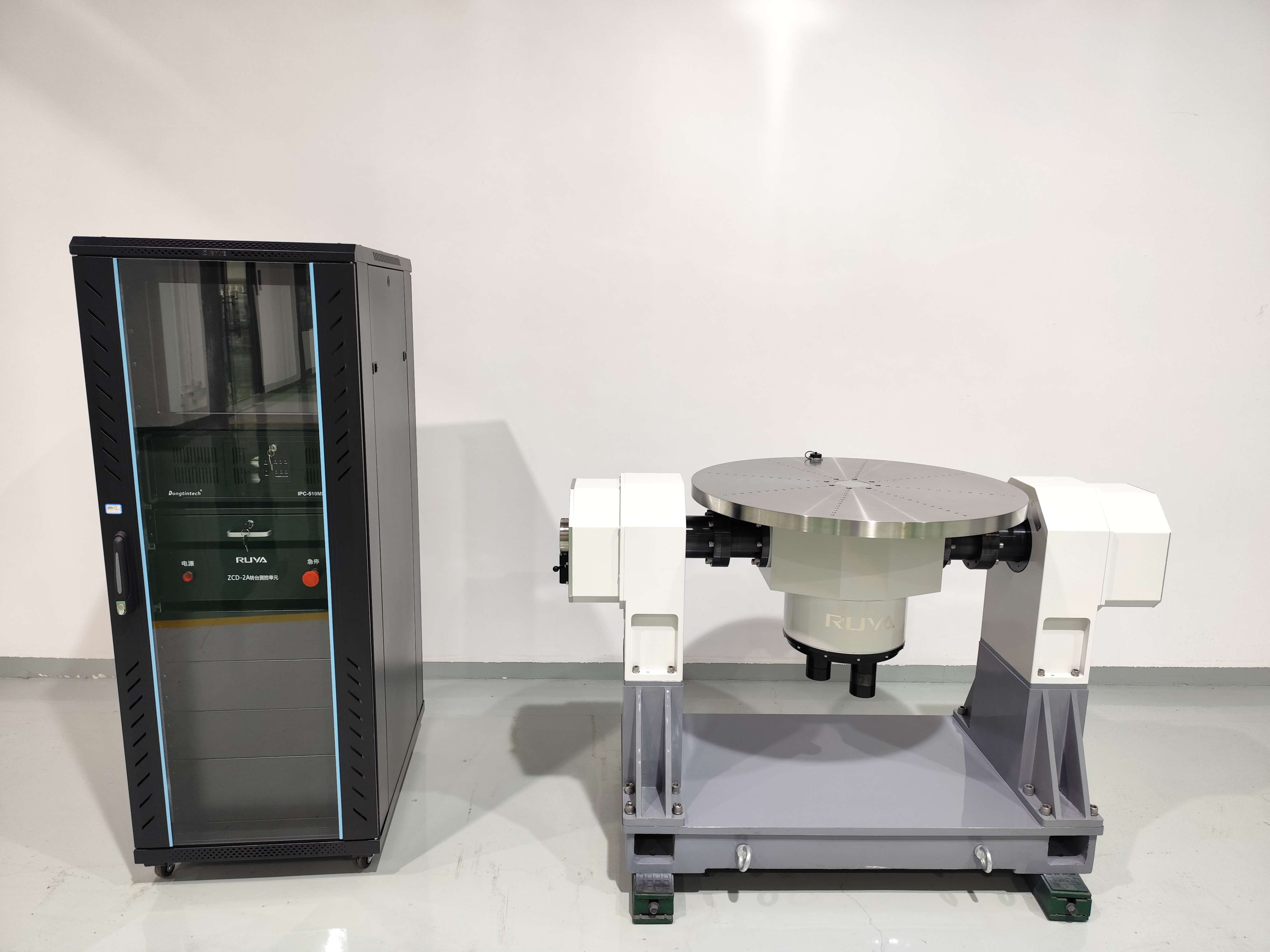
The temperature controlled dual axis turntable is a; Environment motion composite simulation system;. It integrates a high and low temperature environmental testing chamber on the basis of a precision mechanical turntable. Therefore, it can not only provide all the aforementioned motion excitations, but also simultaneously apply precise and controllable temperature environmental stress to the load (such as extreme high and low temperatures from -70 ℃ to+150 ℃, temperature cycling, temperature shock). Its design goal is to reproduce the complex working conditions of the coupling of "motion" and "heat" experienced by the product in the real world.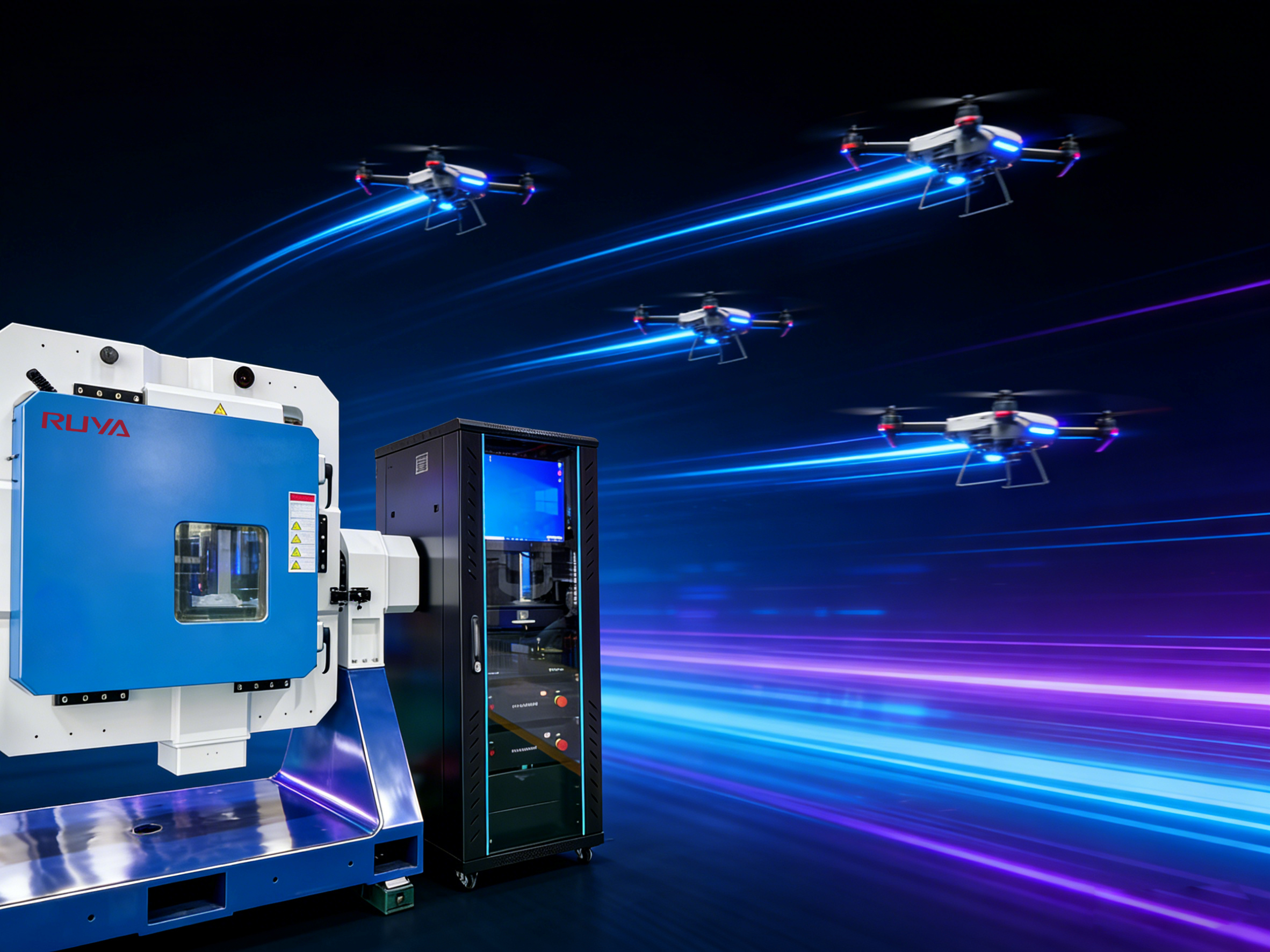
2、 Expansion of Testing Dimensions: From Performance Calibration to Environmental Adaptability Verification
The difference in functional positioning directly leads to a world of difference in testing dimensions and depth between the two.
The ordinary dual axis turntable mainly serves for basic performance calibration and functional verification. Its typical testing tasks include: calibrating parameters such as scale factor, zero bias, nonlinearity, and axis alignment error of inertial devices at stable room temperature; Evaluate the dynamic tracking performance of the servo system; Or conduct static and dynamic functional tests on inertial navigation systems. The question it answers is: "What is the performance accuracy of the product in an ideal environment
The temperature controlled dual axis turntable extends the testing depth and breadth to the fields of environmental adaptability and reliability. The unique tests it can complete include:
High and low temperature performance testing: directly measure the drift curve of key parameters such as gyroscope zero bias and accelerometer range as a function of temperature, and evaluate the product's ability to start and operate at extreme temperatures.
Temperature motion coupling error calibration: During the temperature change process or at a specific temperature constant point, perform full parameter calibration to establish an accurate temperature compensation model. This is a key step in improving the performance of high-precision inertial navigation systems in practical applications.
Reliability screening and identification test: By applying multiple stress combinations such as temperature cycling, vibration, and centrifugation, potential defects of the product are accelerated and exposed to verify its working life and reliability in harsh environments such as high and low temperature alternation and thermal shock. It answers the more challenging question: "Can a product continue to work reliably and accurately in a rapidly changing real-world environment, such as missile launches, satellite orbits, and vehicle winter and summer operations
3、 Differences in key technical indicators
There are significant differences in the emphasis of performance indicators between the two.
The core indicators of a regular dual axis turntable revolve around motion accuracy, such as position accuracy (up to the level of arcseconds), velocity stability and accuracy (such as better than 1e-5 levels), angular acceleration, shaft verticality, and rotation accuracy. The technical challenge lies in the precise machining of mechanical structures, the ultimate optimization of servo control algorithms, and measurement feedback systems.
The temperature controlled dual axis turntable maintains sufficient motion accuracy while introducing another set of stringent environmental control indicators:
Temperature range: typically covering the military grade range of -55 ℃ to+85 ℃, or even wider.
Temperature change rate: such as ≥ 5 ℃/min, used to simulate rapid temperature shock.
Temperature uniformity and fluctuation: Ensure that the temperature field in the working space inside the test chamber is highly stable and uniform, usually requiring a fluctuation of ≤± 0.5 ℃ and a uniformity of ≤± 2 ℃.
The challenge lies in solving the interference of thermal deformation of mechanical structures in a wide temperature range on motion accuracy, as well as ensuring the reliability of temperature sensors and cables under high-speed rotation and high and low temperature conditions. The technical challenge is the high integration of precision machinery, thermodynamics, and measurement and control technology.
4、 Typical application scenario differentiation
The different application scenarios directly reflect the value orientation of its testing capabilities.
The ordinary dual axis turntable is a universal basic equipment for research and development laboratories, production lines, and quality inspection departments. It is suitable for the research and development verification, factory calibration, acceptance testing of inertial devices, as well as basic teaching and research in universities and research institutions. Its application scenarios are relatively standard and the environment is controllable.
The temperature controlled dual axis turntable is an identification and cutting-edge research equipment designed for high-end equipment and products in harsh environments. It is mainly used for:
Aerospace: Performance verification of satellite attitude control components (flywheels, star sensors), inertial navigation systems, and guidance heads in space thermal vacuum or high-altitude low-temperature environments.
Weapon industry: Simulation tests of high overload, high and low temperature impact environments during the launch phase of missile guidance systems.
High precision industry and autonomous driving: establishment of temperature compensation models and full temperature domain accuracy testing for fiber optic gyroscopes, laser radar, and high-precision MEMS-IMU.
Reliability Testing Center: As the core equipment, it performs environmental stress screening (ESS) and qualification testing on products.
5、 Selection suggestion: Match testing requirements with product lifecycle
The choice of equipment fundamentally depends on the testing purpose and the lifecycle stage of the product.
In the early stages of product development, basic performance testing, and routine factory inspection, if the core goal is to obtain the performance baseline of the product in the "ideal state", ordinary dual axis turntables are usually preferred due to their higher cost-effectiveness and more convenient operation and maintenance.
When the product enters the stage of environmental adaptability design, full parameter modeling, and certification, especially for products targeting military, aerospace, high-end industrial, or harsh outdoor environments, the temperature controlled dual axis turntable becomes an indispensable or even the only effective verification method. It can reveal and help solve design defects that only manifest under comprehensive environmental stress.
In summary, the ordinary dual axis turntable provides a pure "motion laboratory", while the temperature controlled dual axis turntable constructs a "comprehensive environmental simulation field" that approximates reality. The latter greatly expands the boundaries of testing by introducing controllable temperature variables, enabling laboratory testing to more accurately predict the performance of products in actual complex environments. It is a key link in the modern high reliability product development process.